It is eleven at night. Someone in your program is having a bad day, and talks about it with NIA. You are not there, and you do not need to be.
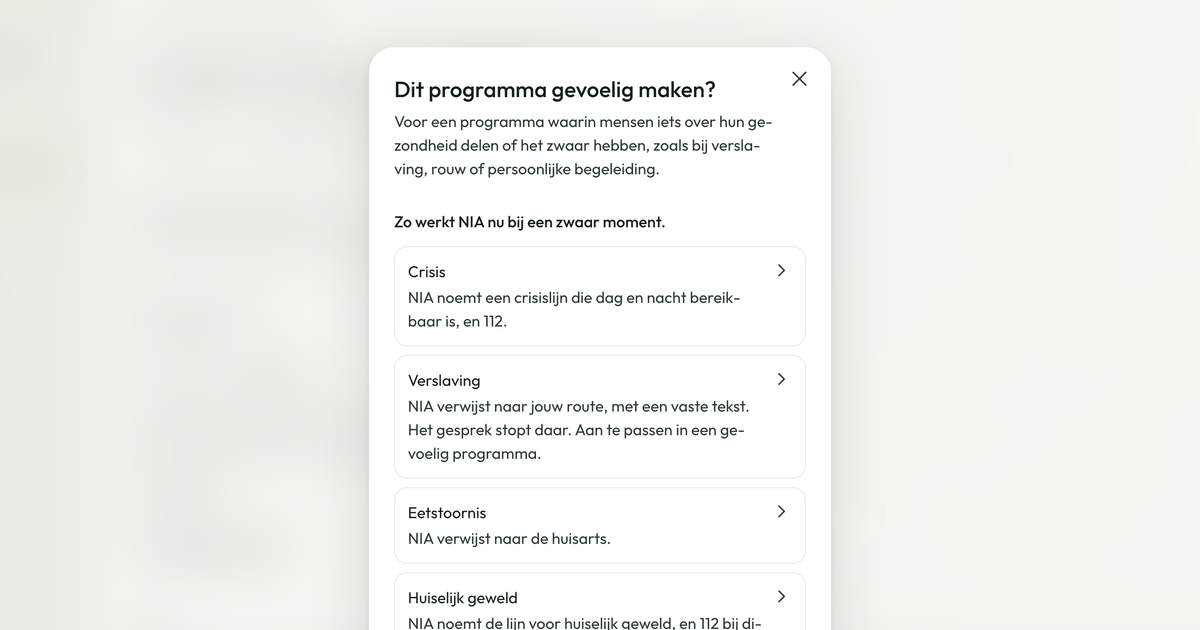
Make your program sensitive, and you set what NIA does in a moment like that. With addiction, NIA points to your route, and the conversation stops there. In a crisis, NIA names a line that is open day and night, and the emergency number.
And if your participant wants to talk to you, there is a button: let my coach know I would like to be in touch. You hear only that. Not what was discussed with NIA, and not why.
Reading along, only with consent.
Sometimes you want to know more to help well. At the same time, trust and safety are fundamental for your participants and clients.
So in a sensitive program you first ask whether you may read the conversations with NIA, and say why. Your participant decides, can stop at any time and sees when you last read. Consent is not a requirement for taking part in your program.